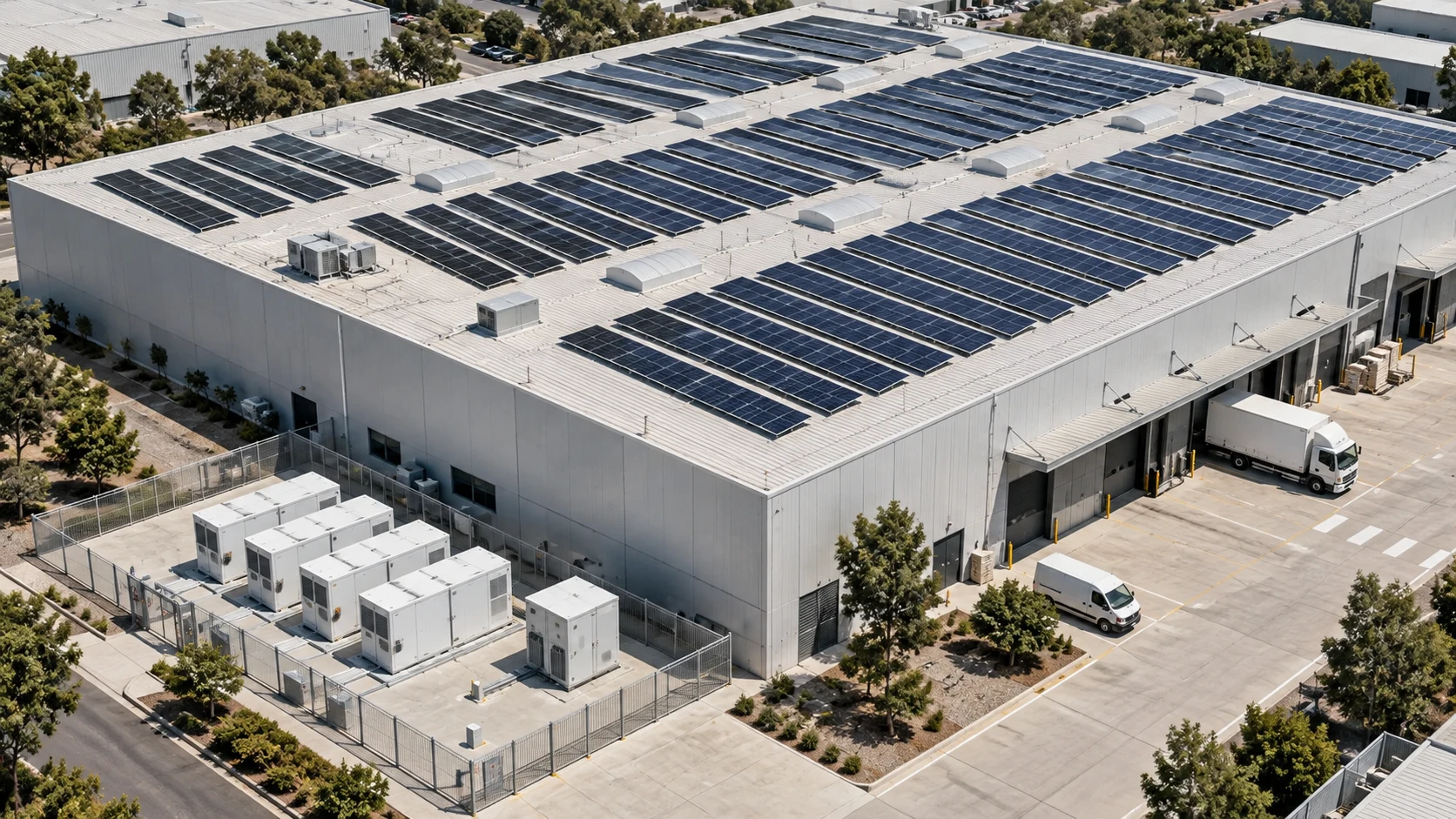
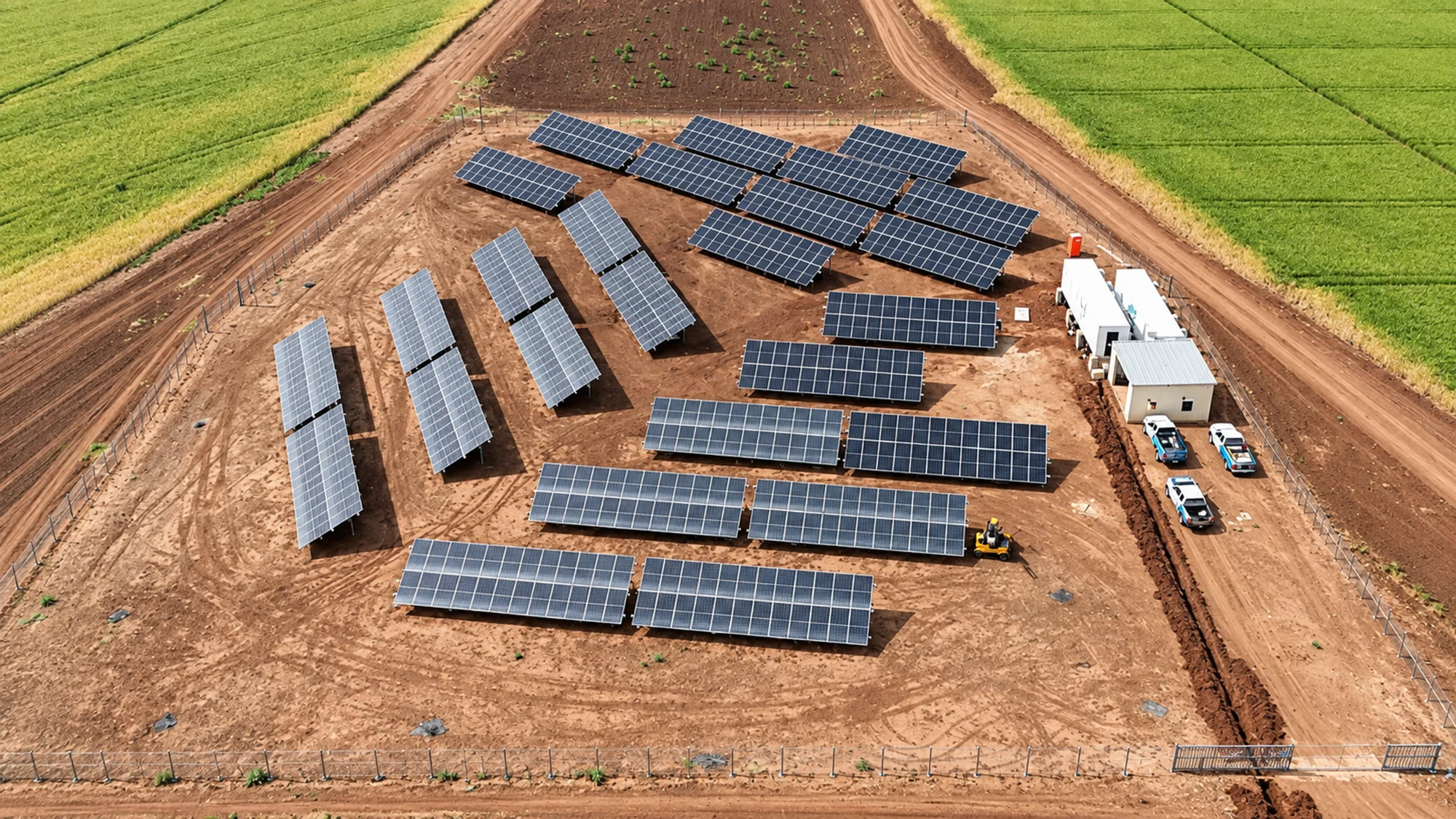
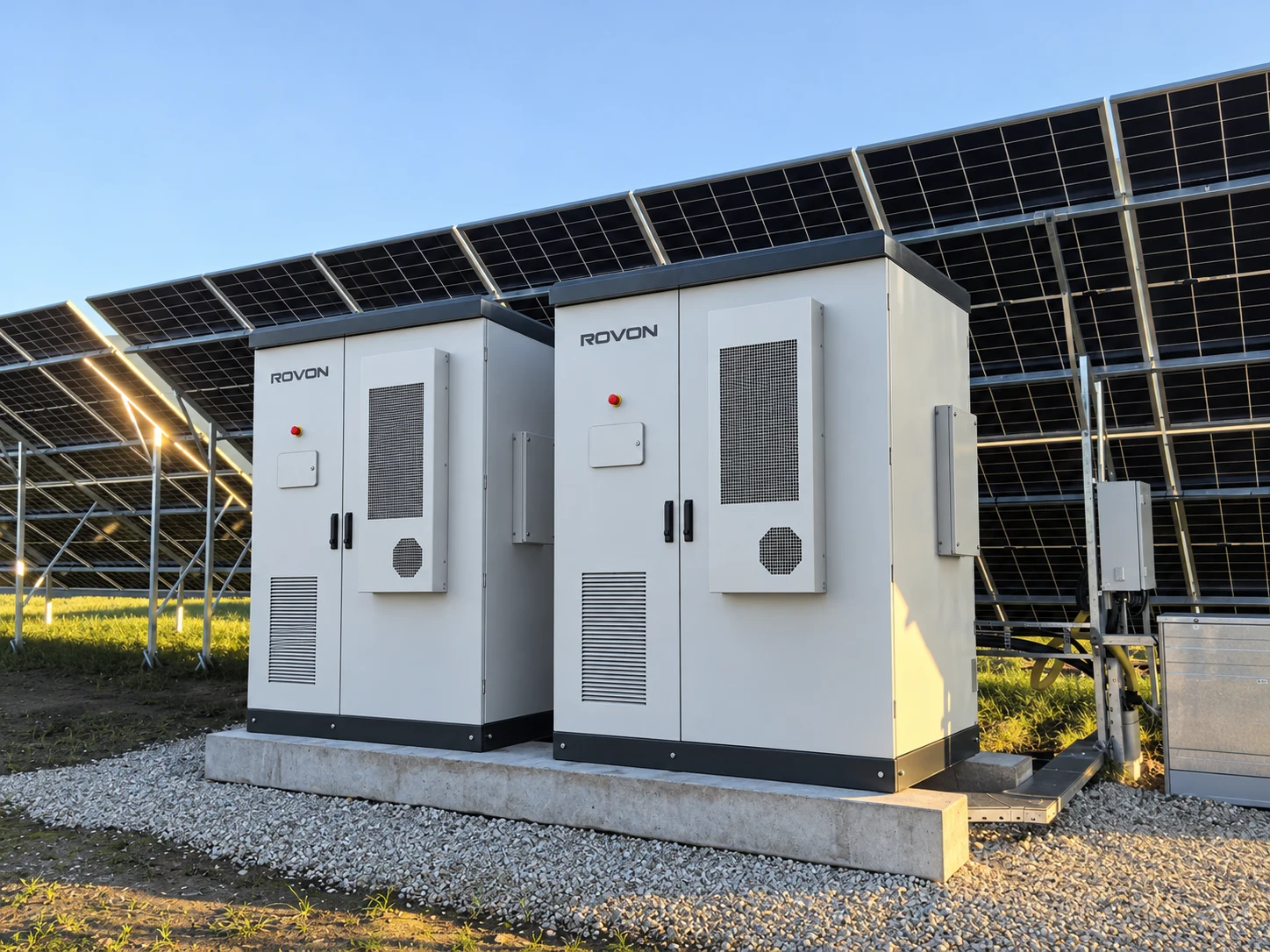
Connect rooftop solar, battery storage and power conversion around your demand, tariffs and continuity needs. Start with the site—not a predetermined cabinet size.
Choose a starting point. We connect the operating goal to the equipment it needs.
GENERATION AND DEMAND
Bring production closer to consumption.
Review daytime demand against available rooftop generation. Storage can absorb excess solar and shift energy to operating hours when it is useful.
An interval load profile reveals more than a monthly total. Existing PV can often be assessed for an AC-coupled addition.
POWER AT THE RIGHT TIME
Size storage around the peak you want to manage.
Battery discharge can supplement the site supply during selected high-demand periods. We review peak duration, tariff structure, transformer capacity and the desired dispatch strategy.
Savings depend on the actual tariff, load profile and operating schedule. Storage power and energy are sized separately.
CONTINUITY BY DESIGN
Define what must keep running.
Separate essential processes from discretionary loads. Check starting currents, acceptable interruption time and whether generator coordination is required.
Backup needs compatible grid-forming equipment, protection and transfer arrangements—not every grid-connected PCS supports it.
THE DETAILS THAT CHANGE THE DESIGN
Follow the load. Then select the hardware.
A cabinet count is the result of the design. It is not the starting point.
Read the site demand.
Use interval consumption, peak loads and operating hours to compare PV power, battery kWh and PCS kW.
Work within the connection.
Review transformer headroom, voltage, export restrictions, protection and the AC/DC coupling approach.
Plan for the real environment.
Space, ambient temperature, access, cable routes and maintenance clearances influence cabinet format and the installation scope.